Bariatric and metabolic surgery is assessed as a whole-patient problem, not a weight problem: the duration of obesity and what has already been tried, the comorbidities that the operation is expected to treat (type 2 diabetes, obstructive sleep apnoea, reflux, hypertension, fatty liver), eating pattern and reflux symptoms, mental health, and what the patient expects the operation to achieve. Reflux history in particular changes the operation chosen.
Who is a candidate?
The 2022 ASMBS and IFSO guidelines recommend metabolic and bariatric surgery for adults with a BMI of 35 kg/m2 or more, whether or not they have a related disease, and suggest considering it from a BMI of 30 in people with metabolic disease such as type 2 diabetes. In Asian populations the thresholds are lower, because metabolic risk rises at a lower BMI.
The common operations
| Operation | What it does | Points to know |
|---|---|---|
| Sleeve gastrectomy | Removes most of the greater curve of the stomach, leaving a narrow tube | The most performed operation worldwide. Can worsen or cause reflux. |
| Roux-en-Y gastric bypass | A small gastric pouch joined to a Roux limb of jejunum | Often preferred when there is significant reflux. Risk of marginal ulcer and internal hernia. |
| One-anastomosis gastric bypass | A long, narrow pouch with a single loop anastomosis | Technically simpler than a Roux-en-Y bypass. Bile reflux and nutritional deficiency need watching. |
Complications to recognise on the ward
Red flags after bariatric surgery
- Tachycardia — a persistent heart rate above about 120 is a leak until proven otherwise, even when the abdomen feels soft. Obese patients often have few abdominal signs.
- Bleeding — from the staple line, into the lumen or the abdomen.
- Persistent vomiting — stenosis or a twist; and in any patient vomiting for weeks, give thiamine before glucose to prevent Wernicke encephalopathy.
- Colicky pain months or years after a bypass — an internal hernia until proven otherwise, even with a normal CT.
- Long-term deficiencies — iron, vitamin B12, folate, vitamin D and calcium. Lifelong supplements and follow-up.
AI-Enhanced Bariatric and Endobariatric Surgery
A review of artificial intelligence across bariatric and endoscopic weight-loss interventions, synthesising roughly 300 studies from 2018 to 2025 — what the models can already predict, and what they still cannot.
Calculators for this topic
Related pages
Related
Test yourself: Champion
5 rapid-recall questions on this topic, thirty seconds each.
Single-best-answer questions with answers, explanations and references.Start →
Other topics
Everything on the site sits under one of these.
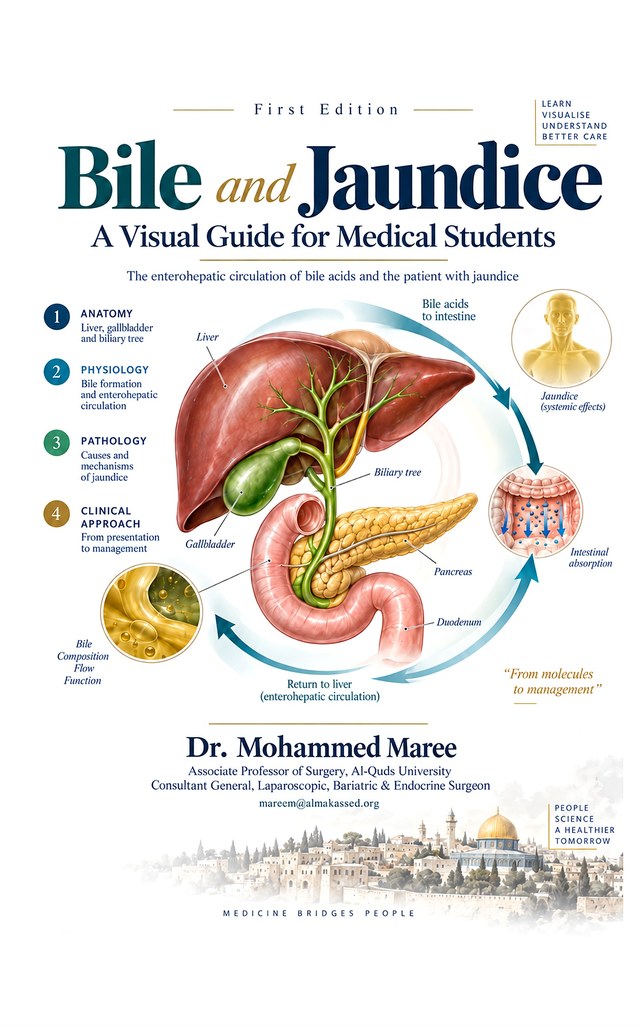 Liver, gallbladder & jaundiceBile acids, the three types of jaundice, liver function tests and the gallbladder patient.Explore topic →
 IV fluids & electrolytesWhat bag, how much and how fast: maintenance, resuscitation, replacement, sodium and potassium.Explore topic →Acid–base & blood gasesRead any arterial blood gas in five steps: compensation, the anion gap and the surgical patterns.Explore topic →
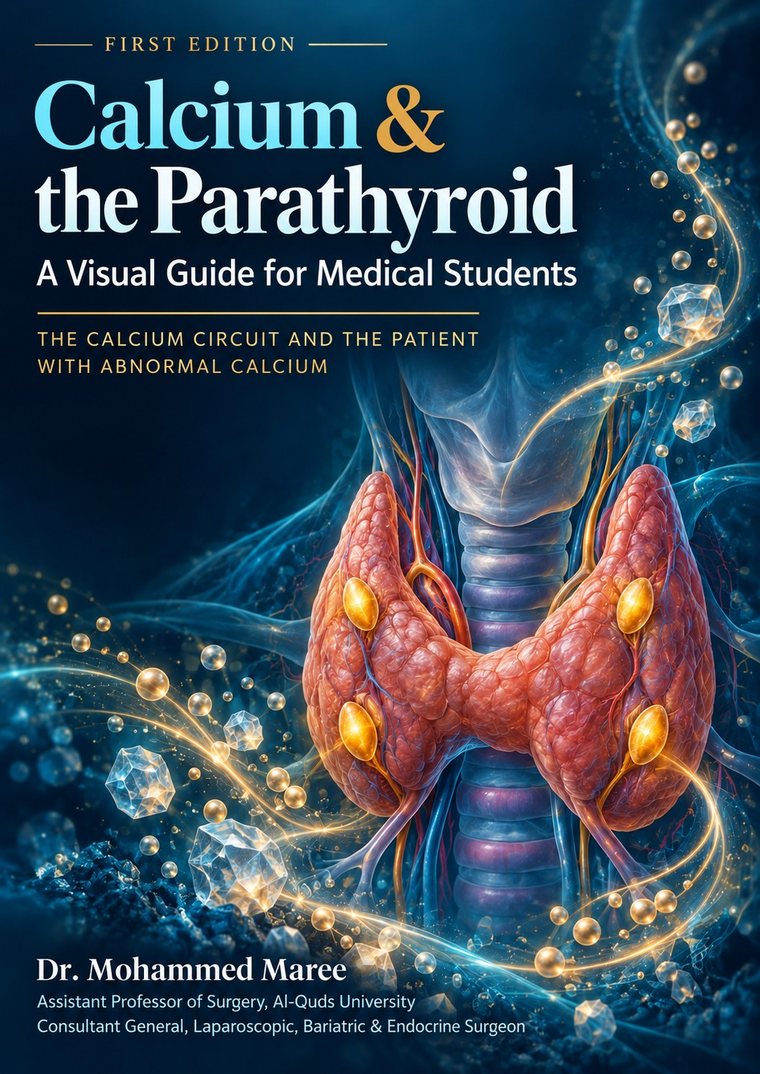 Endocrine surgeryThe thyroid and the parathyroids: the neck lump, calcium, and the patient after a thyroidectomy.Explore topic →Bariatric & metabolic surgeryWho is a candidate, which operation, and the complications to recognise on the ward.Explore topic →Hernia & the abdominal wallReducible, incarcerated or strangulated; inguinal or femoral; and when it needs a surgeon tonight.Explore topic →Acute abdomen & GI surgeryAbdominal pain, bowel obstruction, appendicitis and GI bleeding: the histories and the investigations.Explore topic →Vascular & woundsVenous, arterial and neuropathic ulcers, the cold leg and the diabetic foot.Explore topic →Surgical oncologyHow cancer starts, spreads and is staged, the genes behind it, screening, the MDT, treatment and oncological emergencies.Explore topic →