What each one is for
| Calculator | Answers | Where you will need it |
|---|---|---|
| IV fluids | What bag, how much, how fast? And how fast may this sodium move? | Every surgical patient who is nil by mouth, burned, vomiting or hyponatraemic |
| Corrected calcium | Is this calcium really abnormal, or is the albumin low? | Any surgical inpatient, and every patient on day one after a thyroidectomy |
| R-factor | Is this liver injury hepatocellular, mixed or cholestatic? | The jaundiced patient, and any abnormal liver panel |
A calculator is not a decision
Each of these turns a few numbers into an answer. Neither knows your patient, your laboratory's reference intervals, or the clinical picture in front of you. Read every result against the interval printed on your own report, and treat the patient rather than the number — the pages behind each calculator explain exactly where the arithmetic stops being reliable.
Where they come from
Each calculator sits beside the teaching that explains it. The corrected calcium page carries the formula in both unit systems, a worked example, the four ways a calcium result misleads you, and the point at which you should stop correcting and measure the ionised calcium instead. The R-factor page does the same for liver tests.
Coming to this page
- Calcium–creatinine clearance ratio — the number that separates familial hypocalciuric hypercalcaemia from primary hyperparathyroidism
- Anion gap and the arterial blood gas, alongside the Acid–Base guide
- Body mass index and excess weight loss, for the bariatric clinic
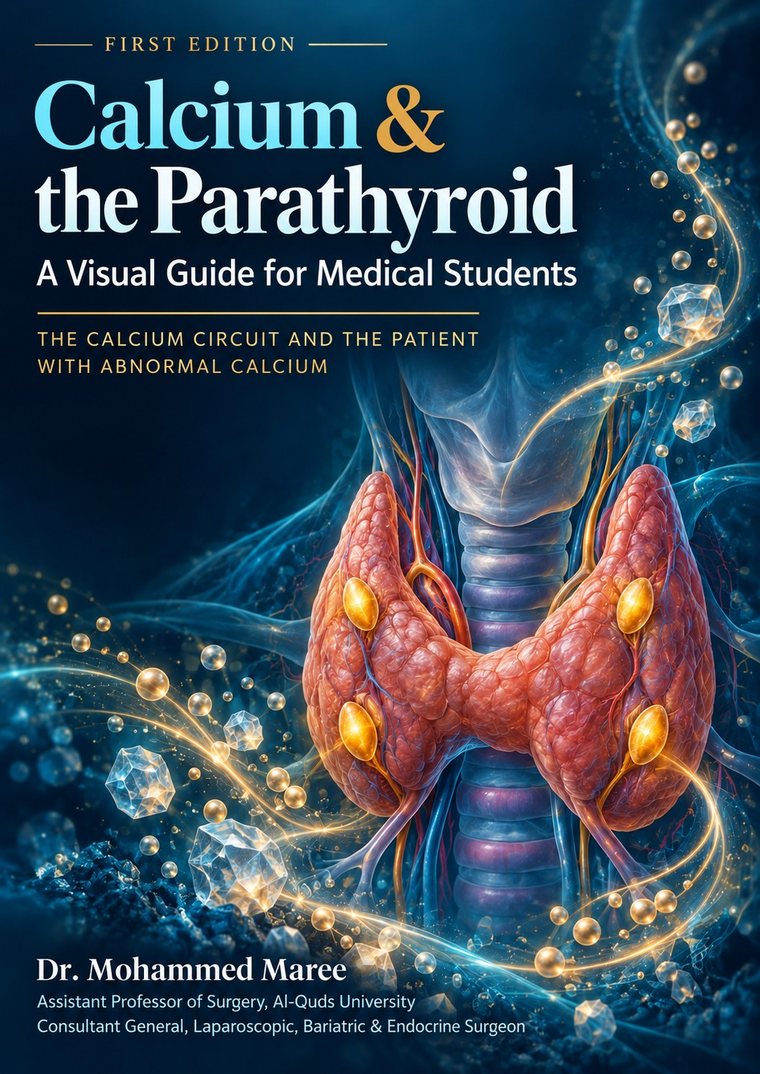
The calculators come out of the free books
The corrected calcium is Figure 11 of Calcium & the Parathyroid; the R-factor is from Bile and Jaundice; the IV fluids calculator is from Intravenous Fluids. Each is 31–35 illustrated pages, free to download, with a DOI.